
What should a fitness program for seniors in assisted living include?
A well-designed assisted living fitness program should combine aerobic movement, muscle strengthening, balance practice, flexibility, and rest. The goal is not athletic performance. It is helping residents remain as mobile, confident, and independent as possible during daily activities.
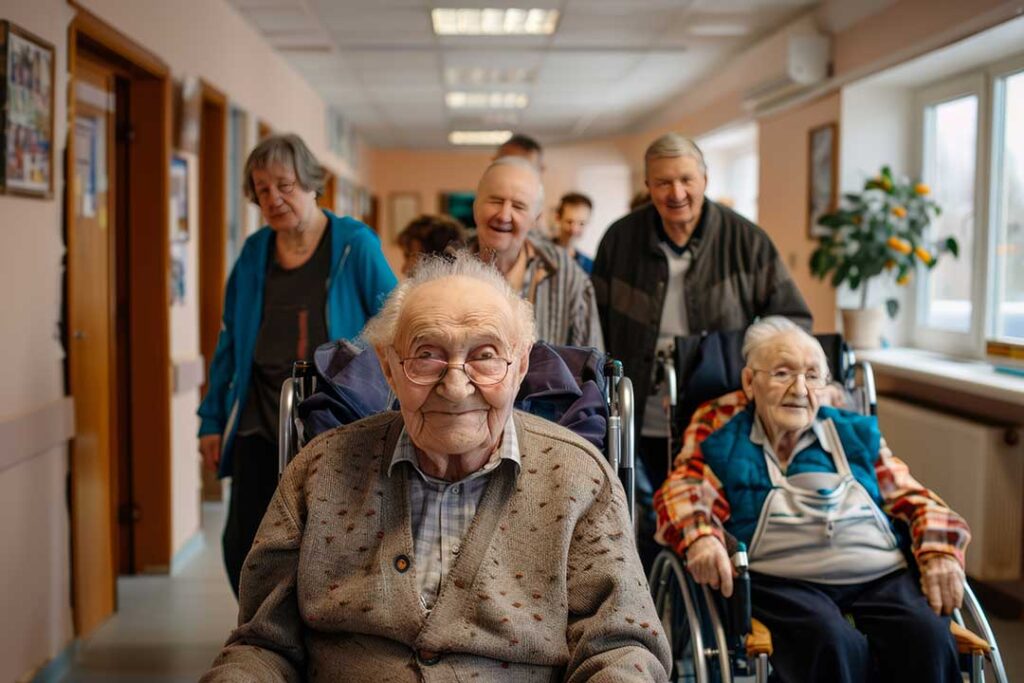
Programs should be adaptable for different abilities. One resident may walk independently, while another may use a walker, wheelchair, or supportive seating. Exercises can often be performed standing, seated, or with assistance so that residents participate at an appropriate level.
A balanced weekly routine may include:
- Walking or seated aerobic movement to support heart and lung health
- Light resistance exercises for the legs, arms, back, and core
- Balance activities that reduce fall risk
- Gentle stretching to support comfortable movement
- Functional practice, such as standing from a chair or reaching safely
The commonly used national goal for adults age 65 and older is at least 150 minutes of moderate aerobic activity per week, muscle-strengthening activity on at least two days, and regular balance exercises. Residents who cannot reach those amounts should still do what their health and abilities allow. Short periods of movement count.
Which exercises are most useful for assisted living residents?
The most useful exercises are those that relate directly to everyday tasks. Standing from a chair can support the strength needed to rise from a dining chair or toilet. Light leg exercises may help with walking and transfers. Reaching and upper-body movements can make dressing, grooming, and meal-related tasks easier.
Examples of appropriate activities include:
- Seated marches, ankle pumps, arm raises, and gentle torso turns
- Repeated sit-to-stand movements using a sturdy chair
- Walking in an indoor hallway or designated exercise area
- Light resistance-band exercises
- Heel raises while holding a stable support
- Side-stepping with supervision when needed
- Gentle tai chi, yoga adaptations, or guided balance movements
- Stretching for the calves, shoulders, hips, and upper back
Exercise should feel purposeful rather than punishing. A resident who finishes a session feeling energized may be more likely to participate again than someone who feels exhausted or sore.
How can fitness classes be adapted for different abilities?
Assisted living classes work best when every activity has more than one version. A walking exercise might be offered as hallway walking, supported standing, or seated leg movement. A strength exercise might use body weight, a light band, or no resistance at all.
Instructors and care staff should pay attention to:
- Walking ability and use of mobility aids
- Vision, hearing, and communication needs
- Arthritis, osteoporosis, heart conditions, or lung disease
- Recent illness, surgery, or hospitalization
- Memory changes or difficulty following multi-step directions
- Fatigue levels at different times of day
- Fear of falling or reluctance to exercise in a group
Instructions should be short, demonstrations should be visible, and the pace should allow time for residents to respond. Music may improve enjoyment, but it should not be so loud that participants miss safety instructions.
A person living with dementia may benefit from familiar movements, repetition, visual cues, and a calm routine. The activity does not need to be complex to be valuable.
Does seated exercise really provide health benefits?
Yes. Seated exercise can improve circulation, joint movement, muscle endurance, and confidence. It is also a practical starting point for residents who cannot safely stand for long periods.
Seated activity may include alternating foot taps, knee extensions, reaching in different directions, hand squeezes, arm curls, and gentle rhythmic movements. These exercises do not replace every benefit of walking or standing, but they can reduce long periods of inactivity and help preserve function.
Residents who sit for much of the day may benefit from brief movement sessions several times rather than one demanding class. A few minutes of activity before meals, during a social program, or between regular routines can be easier to manage.
How does balance training help prevent falls?
Balance training helps the body respond more effectively when weight shifts or the walking surface changes. It may also improve confidence, which matters because fear of falling can lead people to move less and gradually lose strength.
Examples include:

- Shifting weight from one foot to the other while holding a stable surface
- Practicing heel-to-toe steps with support nearby
- Rising from a chair and sitting down slowly
- Taking controlled side steps
- Standing with feet in different positions
- Turning slowly under supervision
Balance exercises should never require residents to stand without support if they are unsteady. A sturdy chair, railing, or other approved support should be close by. Loose rugs, clutter, poor lighting, and unsuitable footwear can make otherwise reasonable exercises unsafe.
What safety precautions should residents follow?
Residents should begin gradually, especially after an illness or a long period of inactivity. A warm-up and cool-down can help the body adjust to exercise. Movements should be controlled, and residents should avoid holding their breath during strengthening exercises.
Stop the activity and report symptoms such as chest pain, severe shortness of breath, faintness, sudden weakness, or unusual confusion. New or worsening pain should also be taken seriously. People with significant health conditions, recent injuries, or major changes in exercise tolerance may need individualized guidance before increasing activity.
Medication timing can also matter. Some medicines may affect blood pressure, alertness, balance, or heart rate. Staff should know about these concerns when helping plan participation.
Exercise should not be used to “push through” sharp pain, dizziness, or unusual fatigue. Resting is a useful part of a safe program, not a sign of failure.
How can seasonal conditions affect activity in Skippack?
Seasonal weather can change how residents exercise. Cold temperatures, snow, ice, wet entryways, and reduced daylight may make outdoor walking less practical during part of the year. Indoor walking routes, seated classes, and supervised movement sessions can help maintain consistency when outdoor conditions are poor.
During warmer weather, residents may need access to shade, water, lighter clothing, and cooler times of day. Staff should also watch for slippery surfaces after rain and uneven outdoor paths that may be difficult for walkers or wheelchairs.
Because many households in the area include older adults living near family members, relatives may notice changes in walking speed, balance, or stamina during visits. Sharing those observations with appropriate assisted living staff can help identify whether a resident needs a modified routine.
What should families ask about an assisted living fitness program?
Families and residents can ask practical questions rather than focusing only on the number of classes offered:
- Are activities available for seated, standing, and walking participants?
- How are exercises adapted after illness or hospitalization?
- Are balance and strength included, or is the schedule mostly social walking?
- How are mobility aids handled during group activities?
- Are indoor options available during unsafe weather?
- How are progress, fatigue, pain, or falls communicated?
- Can residents participate in short sessions if they cannot manage a full class?
A useful program is consistent but flexible. It gives residents meaningful opportunities to move, supports individual limitations, and connects exercise with everyday independence.
